


Chimneys
Chimney Repair and Rebuilding in North Jersey
Eagle 1 Construction works on chimneys across North Jersey: brick and stone stacks, crowns and caps, flashing where the chimney meets the roof, and the metal covers on framed chimney chases. The photos on this page come from our own jobs in Morris Plains, Montclair, Wyckoff, Oakland and Bloomfield.
On this page
- A chase cover replacement, step by step
- The parts of a chimney
- Why professional chimney work matters
- Brick chimneys: what to look for
- Mortar joints and repointing
- Rebuilding a chimney stack
- Chimney crowns
- Chimney caps and flue pipes
- Chimney flashing
- Chase covers on framed chimneys
- Stone and stone-faced chimneys
- What a chimney inspection looks at
- Chimneys and roofs
- Looking after a chimney
- Repair or rebuild?
- Questions about chimneys
A chase cover replacement, step by step
These six stages come from photos of our own chase cover jobs in Morris Plains. They are shown in the order this kind of work usually goes.
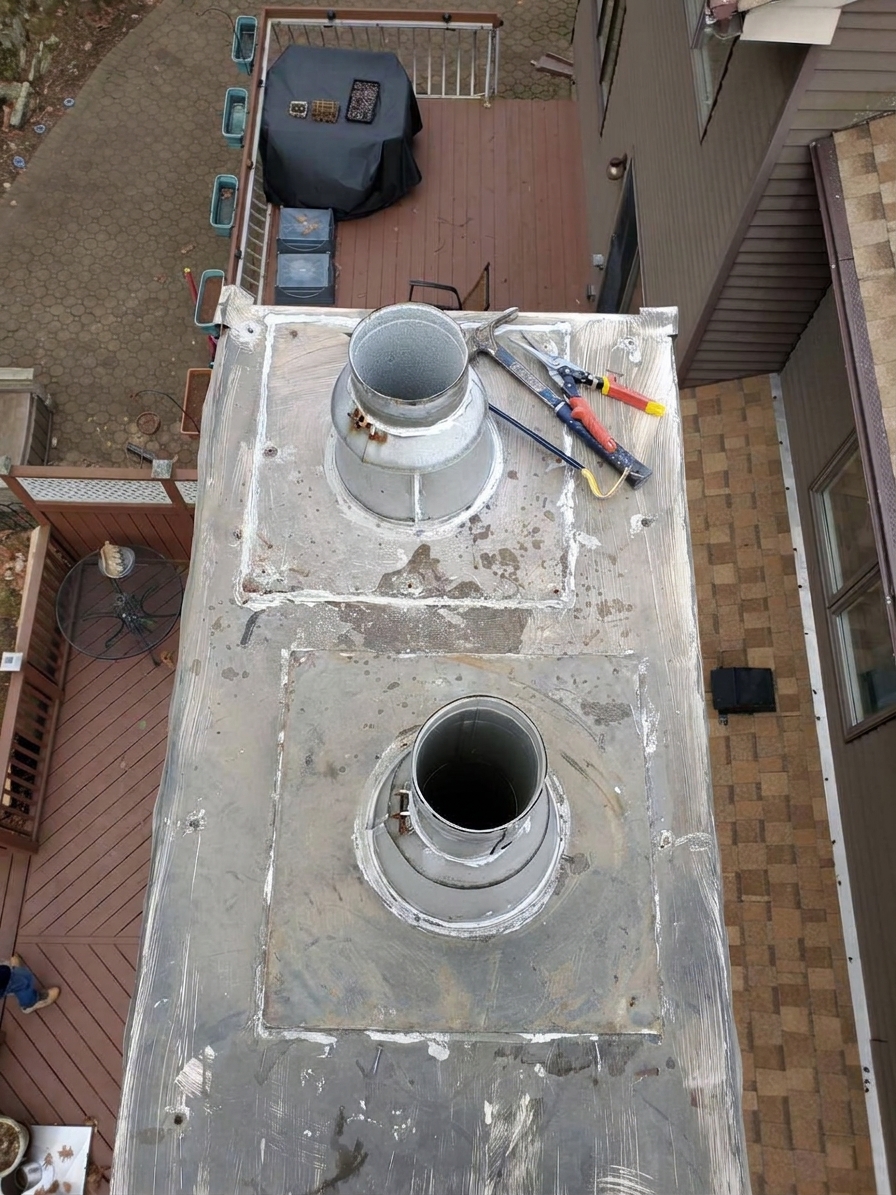
Old cover
The old metal cover has two round collars where the flue pipes pass through it. It is judged first: whether it lies flat, how its seams and collars are sealed and how it meets the sides of the chase.
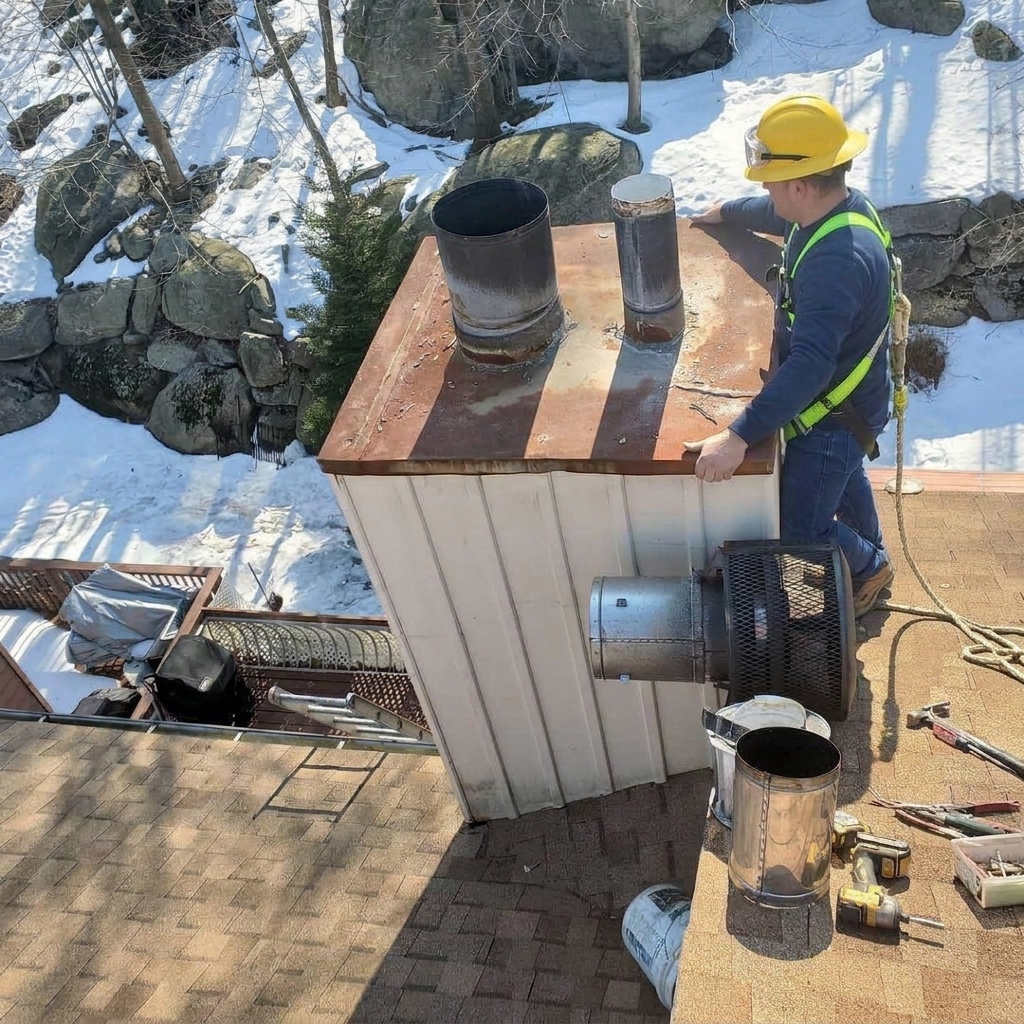
New parts on the roof
On this job the parts for the new top were brought up before the old cover came off: a section of silver pipe and a black mesh cap lie on the roof beside the old cover.
Cover off
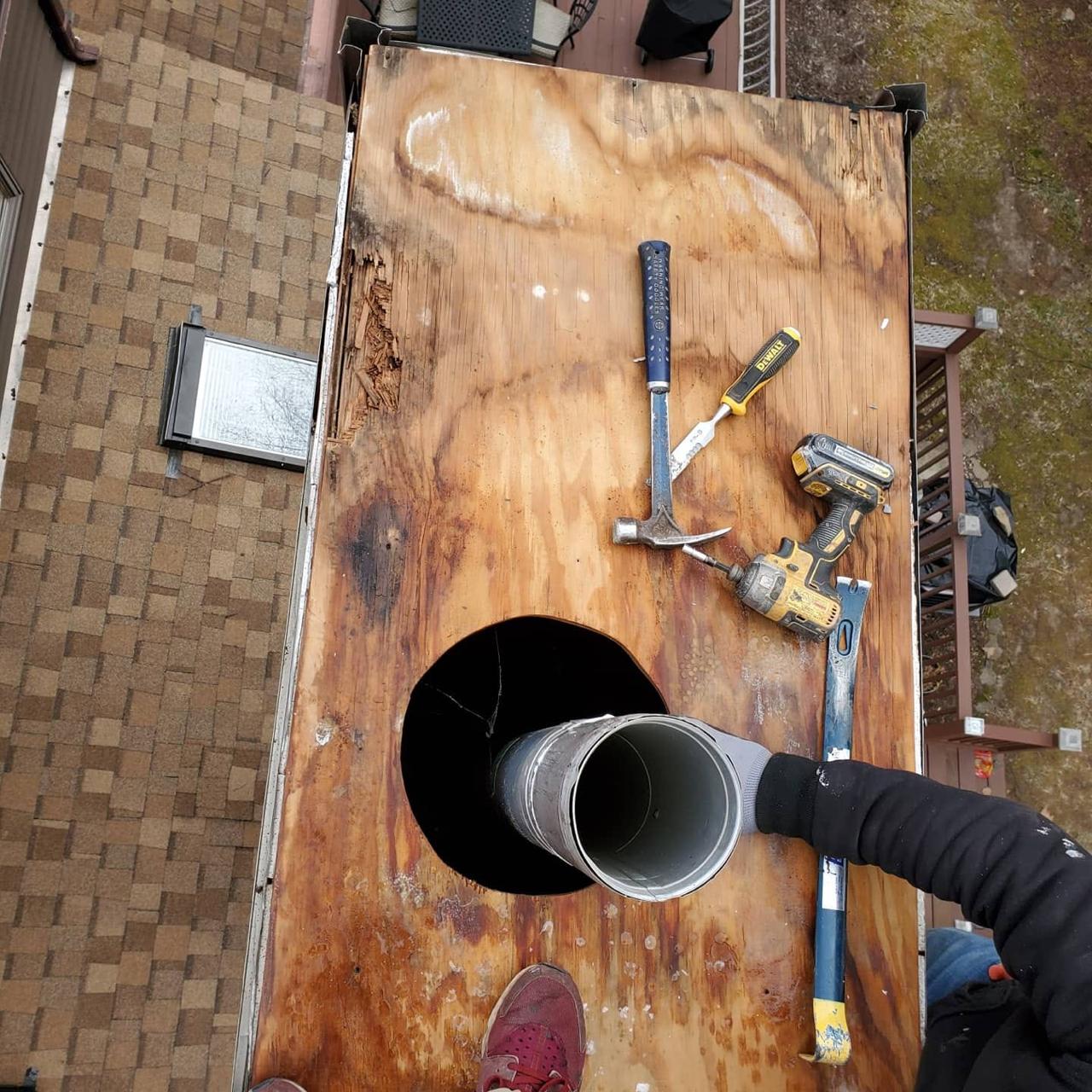
With the cover removed, the top of the chase is exposed. Here it is bare plywood with a round opening cut for the flue pipe. This is the moment to look at the wood the cover was sitting on.
New cover
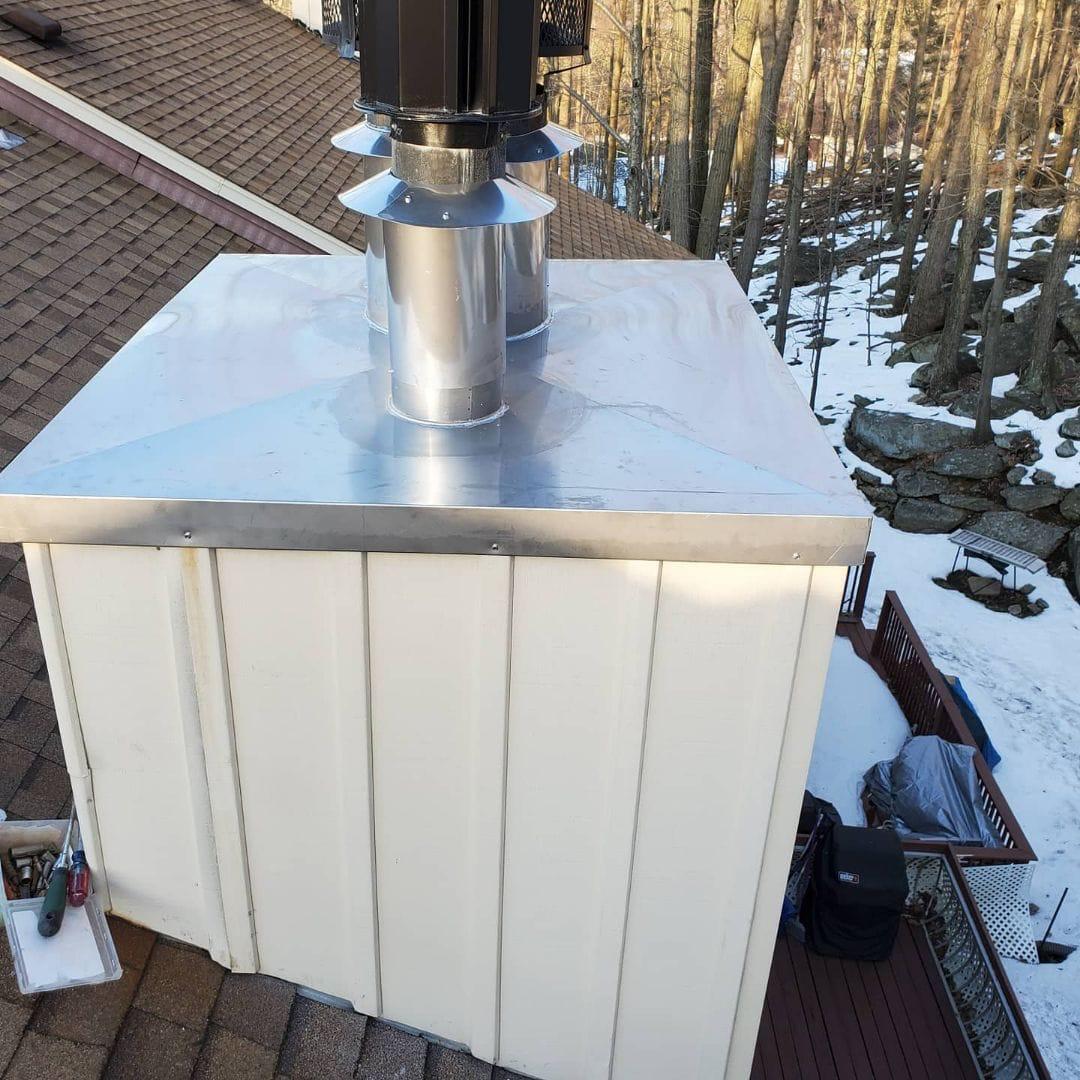
A new metal cover is fitted across the top of the chase with a trim along its front edge, and each flue pipe comes up through its own collar.
Pipes and caps
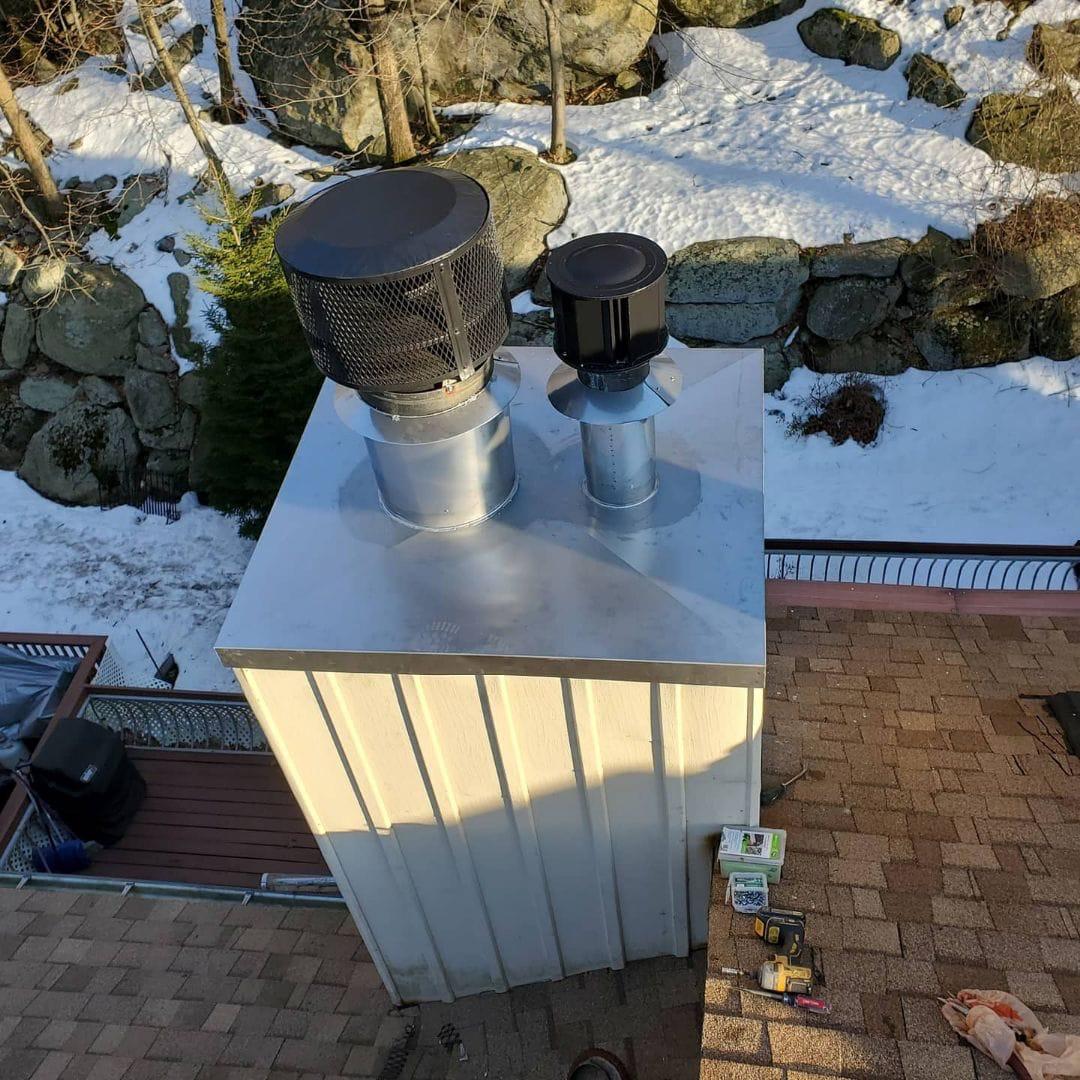
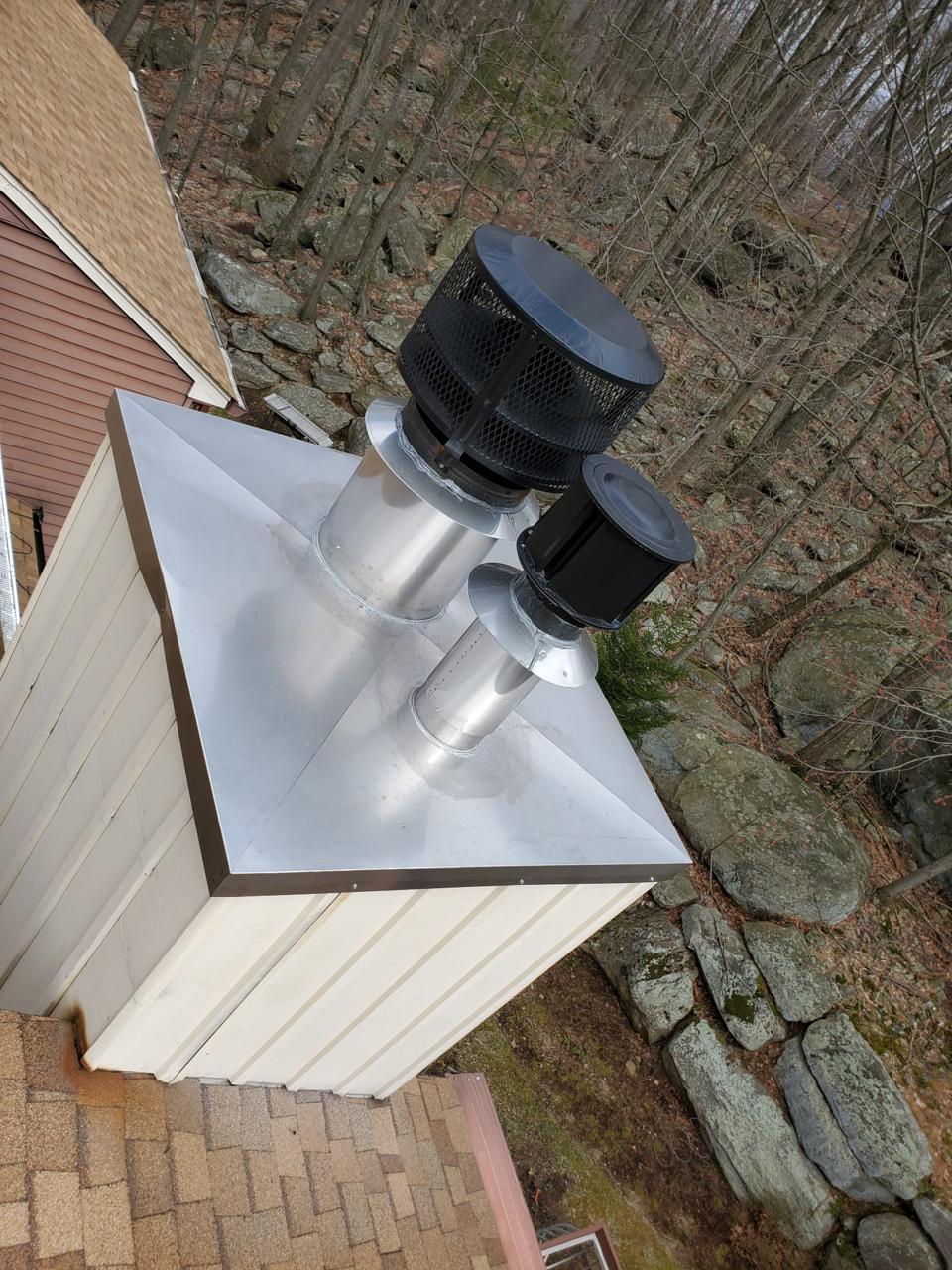
Caps go on the flue pipes to keep rain, leaves and animals out. In this photo a large black mesh-sided cap sits on one pipe and a smaller black cap on the other.
Finished top
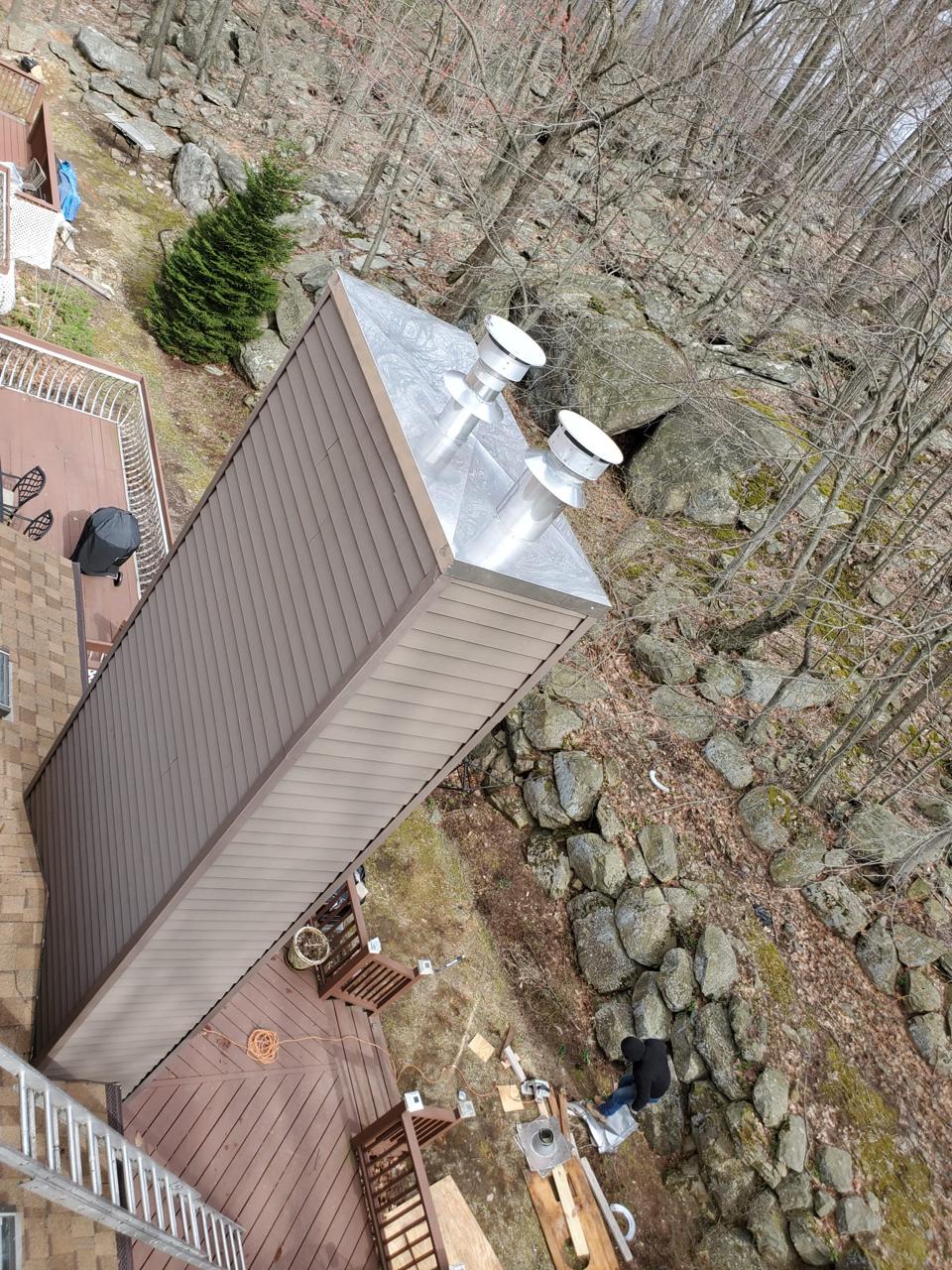
The finished chase has a clean, flat cover with both pipes capped. From the deck below it reads as a plain box, but its top is the part that handles the weather.
The parts of a chimney
A chimney is more than a stack of brick. Starting at the roof and working up, the flashing seals the joint where the chimney meets the roof. The stack carries the flue up through the building. The flue is lined, often with clay tile or metal, and the liner is what contains the exhaust. At the top, the crown covers the masonry around the liner and a cap covers the flue opening.
Not every chimney is masonry. Many houses have a framed chase instead: a wood-framed box, usually clad in siding, that holds a metal flue and is closed at the top with a metal chase cover. The parts have different names, but the job is the same: keep water out of the structure and let the exhaust leave safely.
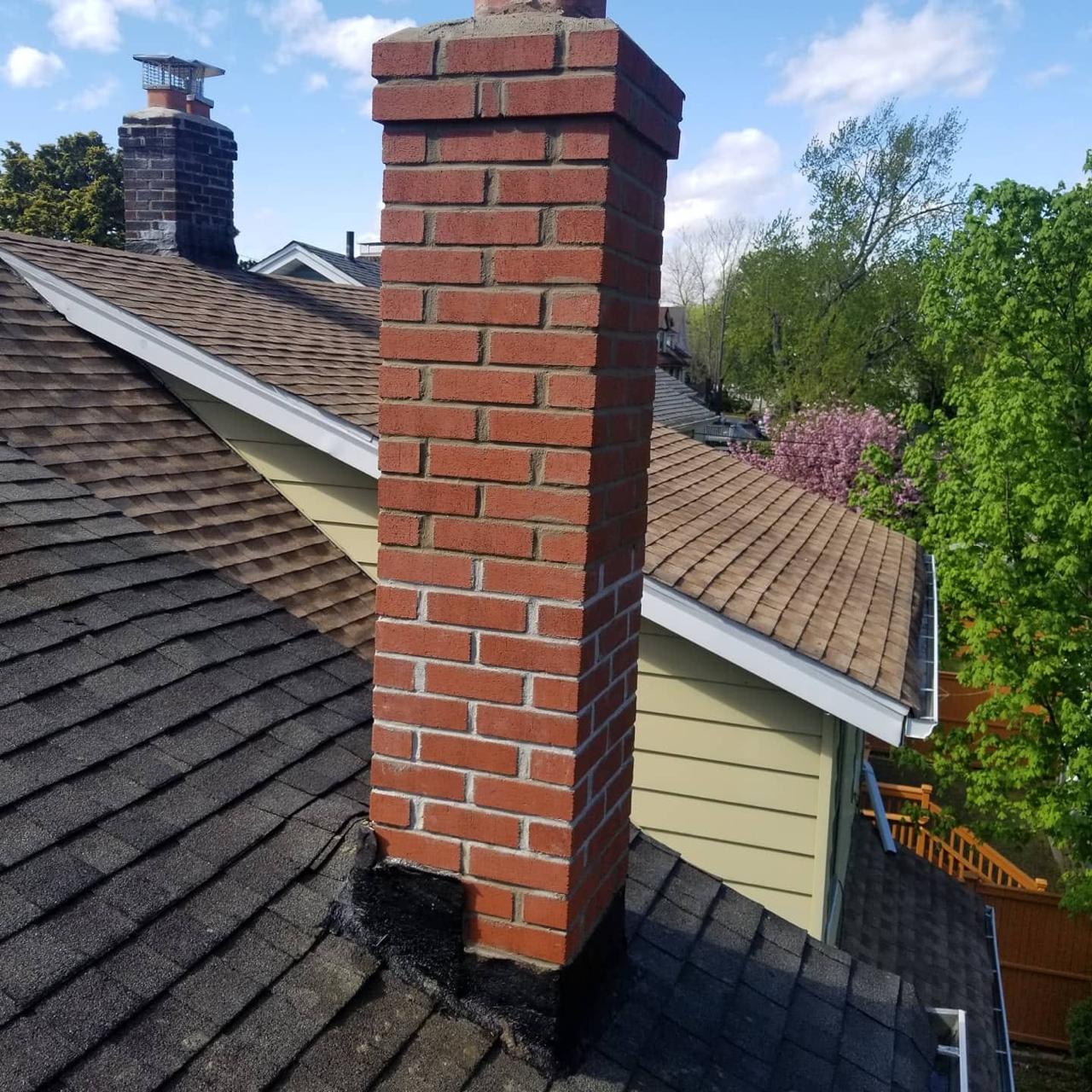
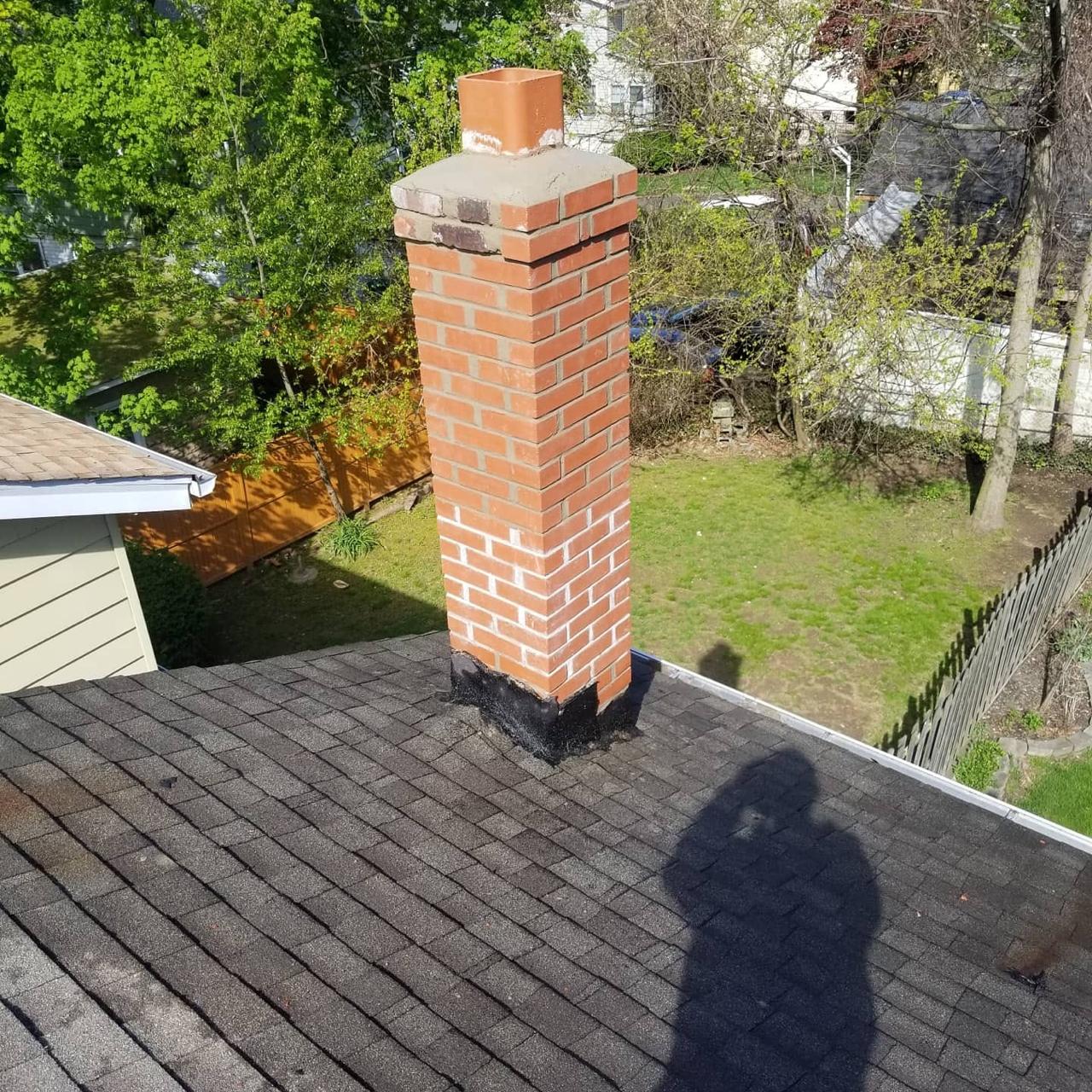
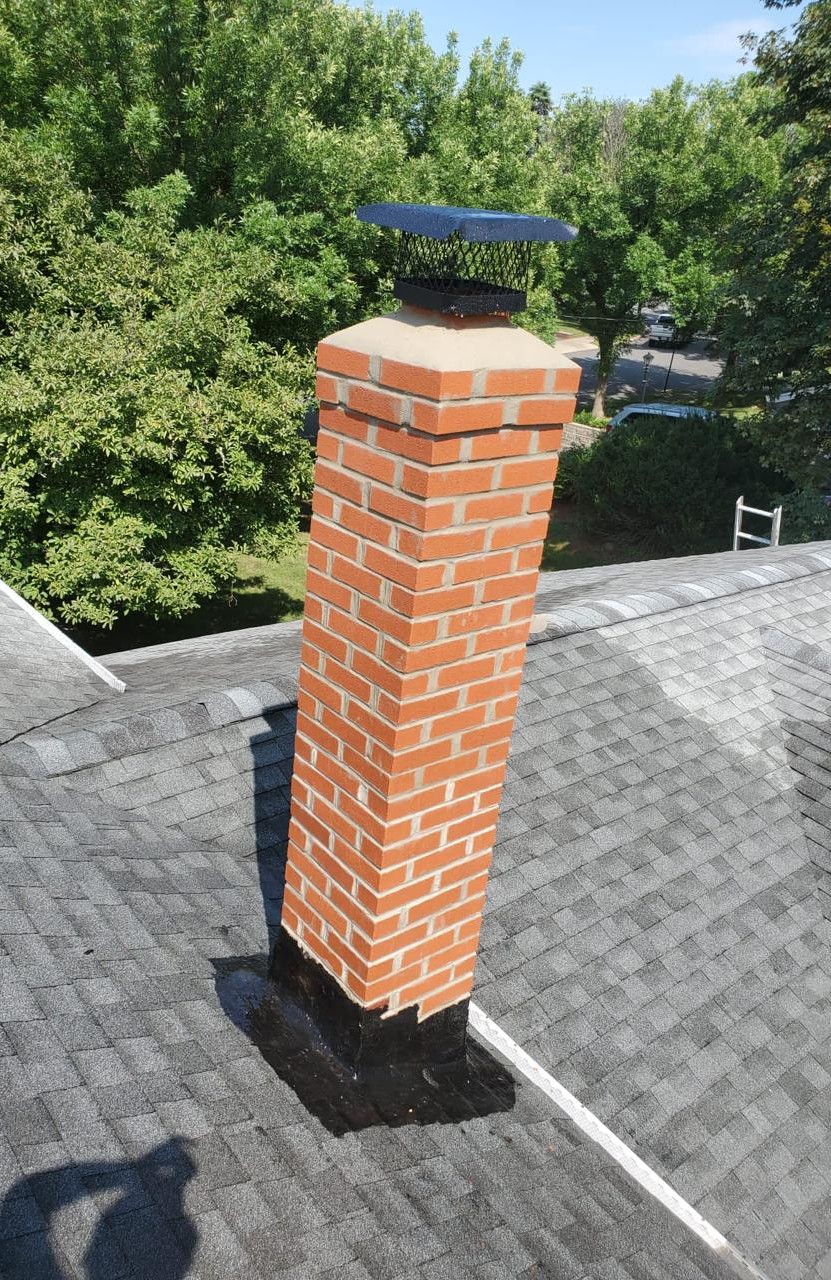
The photo shows the top of a brick chimney: a flat crown, a clay flue tile standing up through it and black flashing at the base where the brick meets the roof. When a chimney leaks, the cause is often one of these joints and not the brick faces, so each part is looked at on its own.
Why professional chimney work matters
A chimney stands above everything else on the roof, so it takes more wind, rain, snow and sun than any other part of the house. Brick and mortar absorb water, freeze and thaw, and slowly wear. Metal parts rust, seams open and sealant dries out. None of that looks dramatic on any given day, which is why chimney problems are often found late.
Professional work starts with working out which part has failed. Flashing, crown, cap, mortar and brick can all let water in, and from the ground they look alike. Repairing the wrong part does not stop the leak: new flashing will not help a cracked crown, and a new cap will not close open mortar joints.
A chimney also vents combustion gases from a fireplace or heating appliance, so the work is not only cosmetic. Flue parts, liners and caps have to suit what they serve and be installed to the manufacturer's instructions and local code. Ask who will do the work and how they decide what is needed.
Brick chimneys: what to look for
Brick is durable, and brick chimneys can last a very long time, but the top of a chimney is the most exposed brick on the house. What matters is not how old the brick is but whether it is still sound: solid faces, joints that hold, and a stack that is straight and tight to the roof.
From the ground, and from photos, a few things are worth noting: brick faces that flake or crack, mortar that is recessed, crumbling or missing, white mineral deposits on the surface, leaning or open joints near the top, and brick that stays dark and wet after the rest of the house has dried. None of these tells you the repair by itself. They tell you where to look closely.
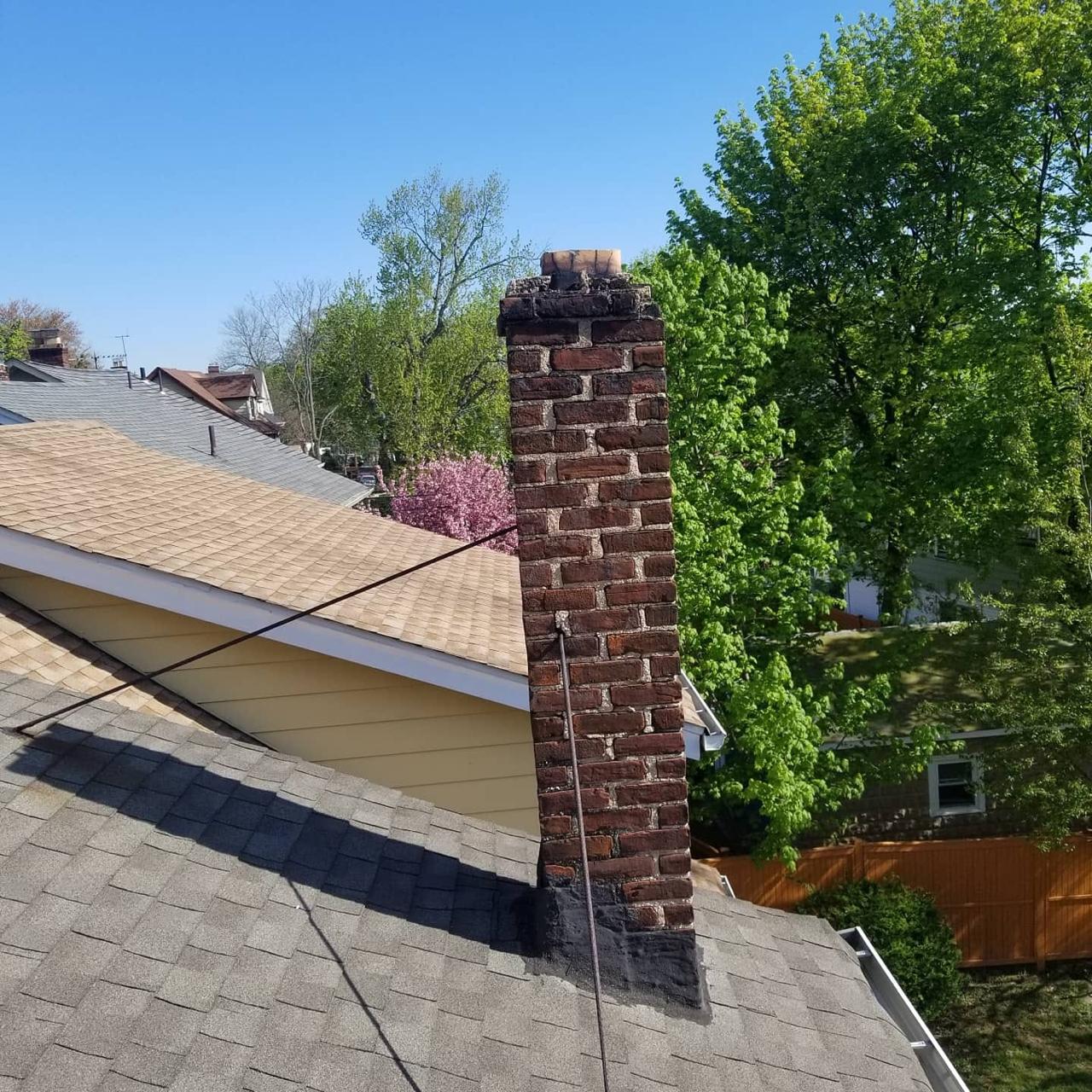
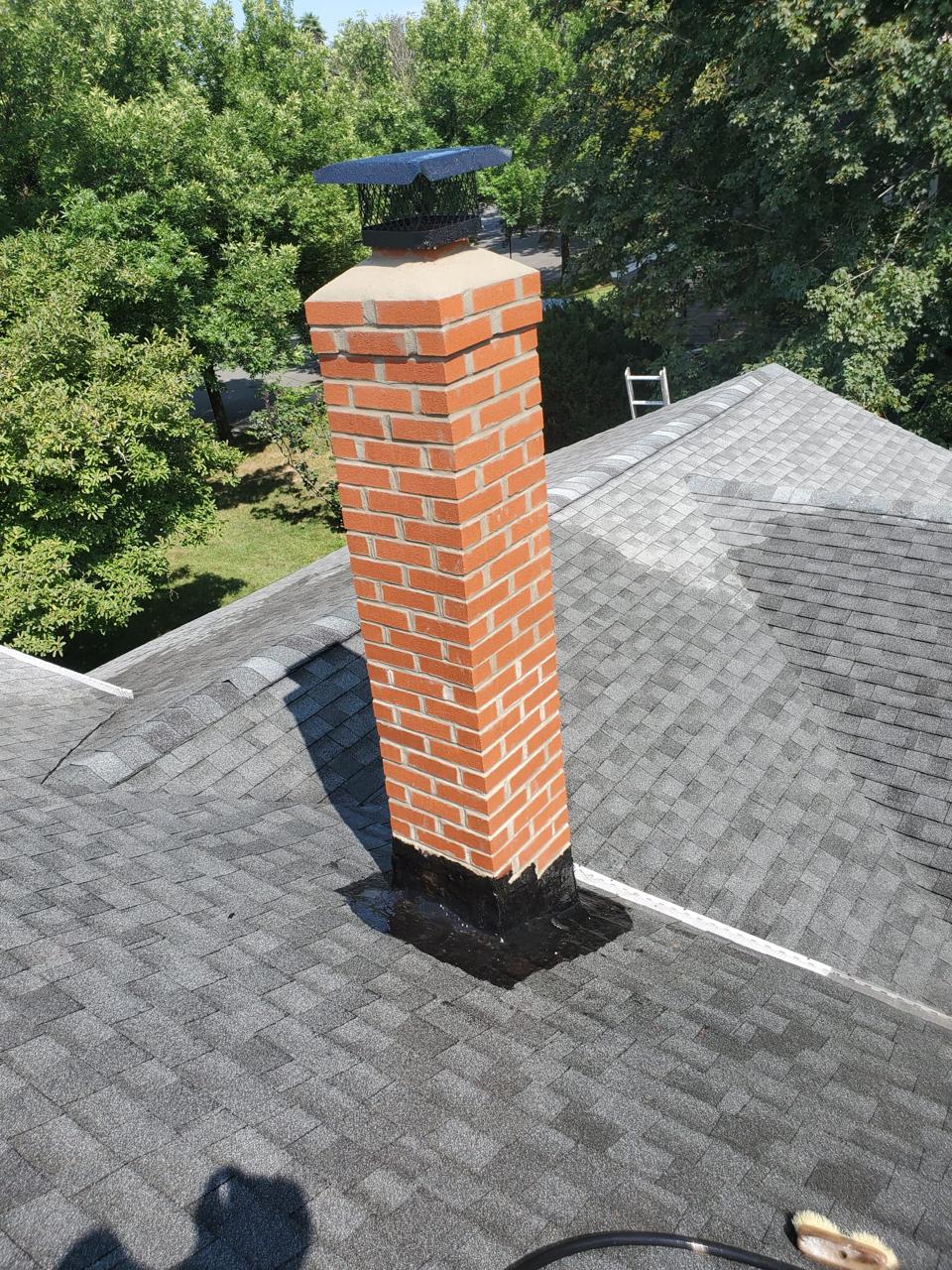
The Montclair photos show brick in two conditions: a chimney of dark, weathered brick, and red brick chimneys with light, even mortar lines. A dark, aged look is not a diagnosis. Condition is judged brick by brick and joint by joint, up close.
Mortar joints and repointing
Mortar holds a brick chimney together and keeps water out of the joints. It is softer than the brick on purpose, so over the years it is the first part to wear. Repointing, also called tuckpointing depending on the method, means cutting out the loose mortar to a proper depth and filling the joints with new mortar.
Preparation decides how long the repair lasts. Joints have to be cleaned out to sound material, not just skimmed over, and the new mortar has to suit the old brick. A mortar that is much harder than the brick can damage the brick faces instead of protecting them.
Repointing is local work when only some joints have failed. It is not the answer when the brick itself is breaking down or the stack is moving. Ask your contractor to show you the joints that need work and explain why.
Rebuilding a chimney stack
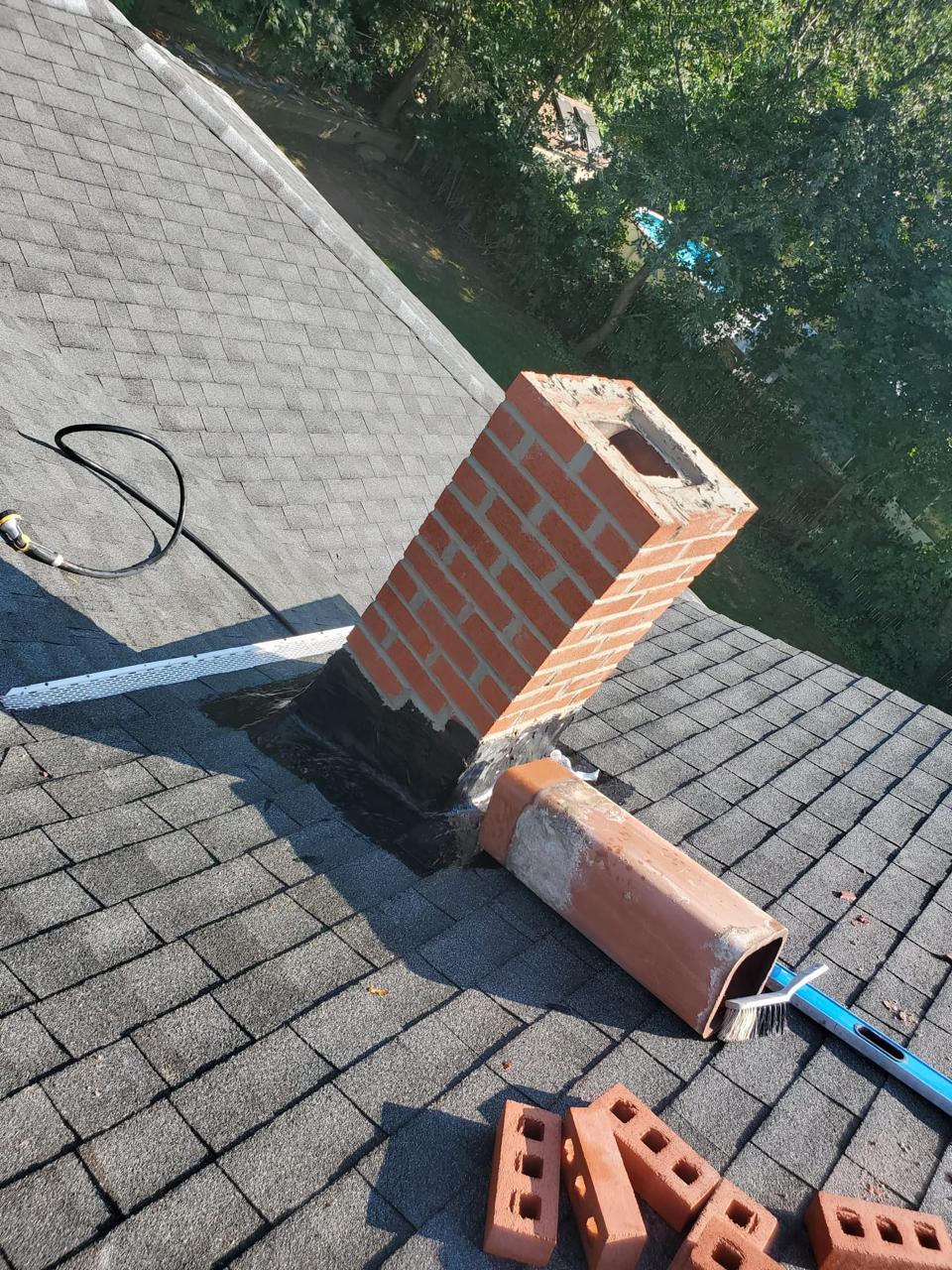
When brick and mortar have broken down past repair, or the stack has shifted, the top of the chimney is taken down and laid up again in new brick. The Montclair photo shows work of this kind: the stack stands with its top open, a section of orange clay flue tile lies on the roof, and loose bricks are set out on the shingles.
Rebuilding is more than stacking brick. The courses have to be level and tied together, the flue has to run straight through the stack, and the top has to be finished with a crown and a cap so the new masonry is protected from the first rain. The flashing at the base is checked at the same time, because it meets the new brickwork.
How much of a chimney comes down depends on how far the damage goes. Some stacks need only the upper courses rebuilt, others need more. Ask your contractor to explain where the sound masonry begins and why.
Chimney crowns
The crown is the slab across the top of a masonry chimney. It covers the brick around the flue and is shaped to throw water off the edges and away from the stack. Because it faces the sky, a crack in it is a direct path for rain into the masonry below.
Crowns are made in different ways, from poured concrete to mortar to cut stone. Whatever the material, a good crown overhangs the stack so water drips clear of the brick, slopes away from the flue and leaves room around the liner for movement.
Small surface cracks can sometimes be repaired and sealed. A crown that is broken up, crumbling or pitched the wrong way may need to be replaced, and that is a good time to look at the cap as well.
Chimney caps and flue pipes
A cap sits over the top of a flue and does three jobs: it keeps rain out, keeps leaves and debris out, and keeps birds and other animals from getting in. Many caps also have mesh sides that let exhaust out while holding sparks back. The right cap depends on the flue it covers, so it is matched to the flue's size and type instead of being picked off a shelf.
On a brick chimney the cap is usually fixed over the flue tile or the crown. On a framed chase like the Morris Plains jobs, the metal flue pipes stand up through the chase cover and each pipe carries its own cap. The black caps in the Montclair photos sit over a flat crown; the caps in the Morris Plains photos sit on silver pipes.
A cap that is missing, loose, bent or rusted through leaves the flue open to the weather. Ask whether it can be replaced on its own or whether the crown beneath it needs work first.
Chimney flashing
Flashing is the metal that seals the joint where a chimney meets the roof, a common place for a chimney leak to start. A typical setup is made of layers: base flashing wraps the low side of the chimney, step flashing runs up the sides and counterflashing is set into the masonry above to cover the top edge of the pieces below. A wide chimney may also have a saddle, a small peaked piece on the high side that sends water around the stack.
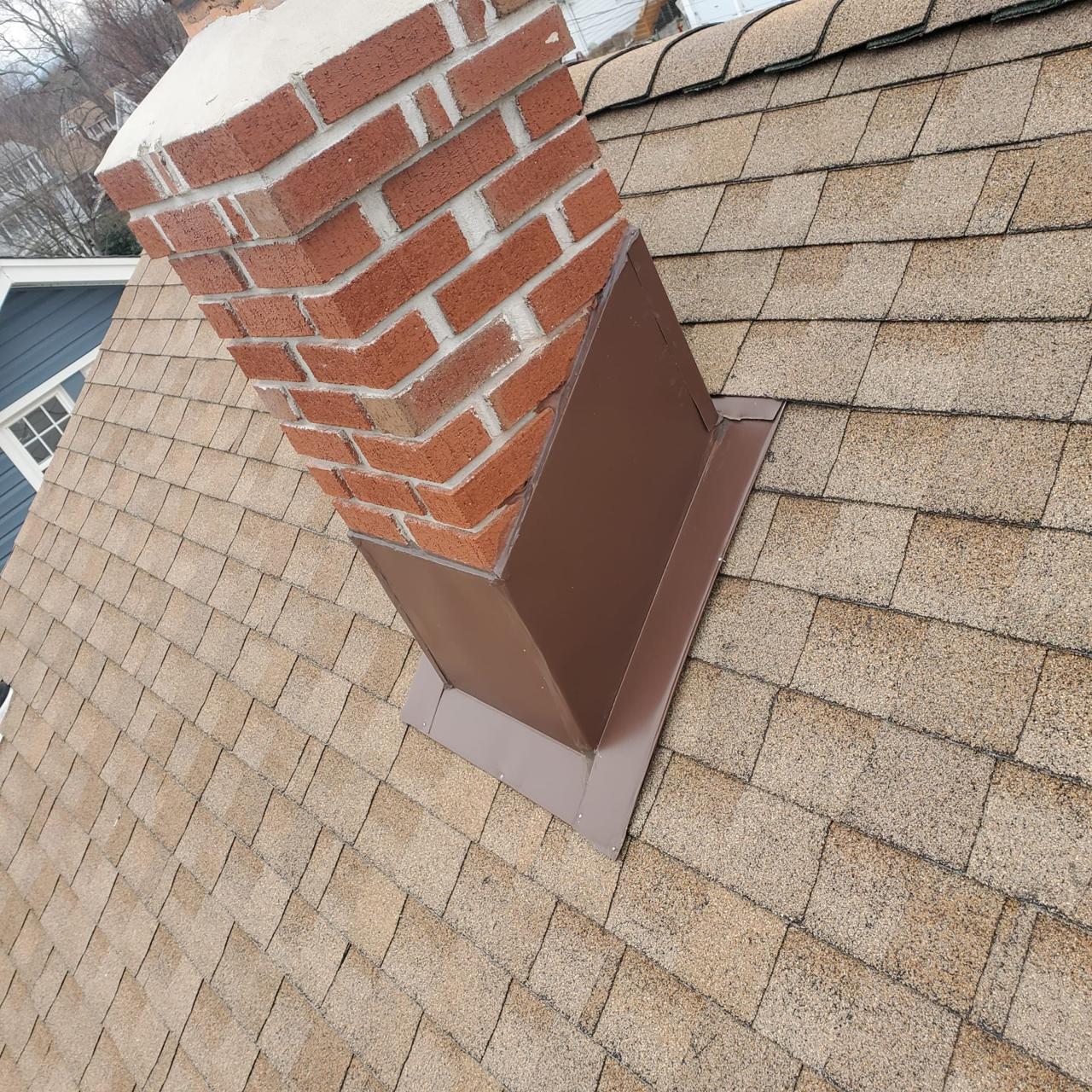
The Bloomfield photo shows brown metal flashing at the base of a brick chimney on a shingle roof. In the Montclair photos the joint at the base is sealed with black flashing material. Flashing is inspected on every chimney job because it belongs to both the roof and the chimney. Whether it is reused or replaced depends on its condition and on whether it works with the new masonry or the new roof.
Because flashing is part of the roof as well, our roofing page explains how it works at walls, pipes and skylights.
Chase covers on framed chimneys
A chase is a wood-framed box built around a metal flue and finished on the outside to match the house. Its top is closed with a chase cover, a metal sheet that sheds rain across the whole top of the chase and has a collar or opening for each flue pipe. On many houses it is the only barrier between the weather and the wood framing under it.
Covers wear in their own ways. A metal sheet can rust, buckle or lose its seal around the pipes, and water that gets through lands on the plywood and framing below. That is why a replacement does more than lay a new sheet over the old one: the old cover comes off, the plywood beneath it gets a look, and the new cover is fitted to the chase and sealed at every pipe.
The two Morris Plains jobs are shown in full on our chimney projects page. The photo here shows a finished chase from the hillside.
Stone and stone-faced chimneys
Stone chimneys follow the same rules as brick ones: they shed water from the top and their joints have to hold. The difference is in the materials. Stone is laid in irregular courses, and the mortar joints are wider and more varied, so a repair has to be matched to the stone and not only to the mortar.
Stone repairs are matched to the stone and its existing joints, so send us a photo and describe what you see.
What a chimney inspection looks at
An inspection works from the roof line up. It looks at the flashing, the stack and its joints, the crown, the cap and, where the flue can be reached, the liner. Most of what matters on a chimney sits high up and out of view, so photos taken at the top make it easy to show you what the inspector sees.
Ask for what you can check yourself: photographs of each problem, a plain description of the cause and a list of the repairs, kept separate from anything optional. A good inspection tells you what is urgent, what can wait and what is fine.
Chimneys and roofs
A chimney crosses the roof, so every roof job touches a chimney and every chimney job touches the roof. The flashing is the link, and it belongs to both. When a chimney is rebuilt and the roof is replaced around the same time, the flashing can be fitted to the finished masonry, which keeps the joint between them simple.
Our roofing page explains roof replacement from the tear-off to the finished ridge, with chapters on flashing and on chimneys and roofs.
Looking after a chimney
Most chimney care is observation. From the ground, look at the top of the chimney after a storm: a cap that has shifted, a flue tile that has cracked, a crown that looks broken or brick that has changed color. Binoculars help. Stay off the roof, since a roof is not a safe place to investigate and a chimney is not something to lean on.
Inside, watch the ceilings and walls around the chimney for stains, peeling paint or a damp smell, and look into the firebox for water after rain. Condensation and plumbing leaks can look the same, so find the cause before choosing a repair.
Repair or rebuild?
One cracked joint does not always mean a new chimney. This is how the two cases usually differ.
| Repair may be enough | Rebuilding or replacement is worth discussing | |
|---|---|---|
| Brick | Mostly sound, with a few flaking faces | Widespread cracking or brick coming loose |
| Mortar joints | Joints worn in some areas | Joints failed through much of the stack |
| Crown | Fine surface cracks | Broken, crumbling or sloping toward the flue |
| Cap and flue pipes | A cap that is missing or loose | Flue parts that are damaged or the wrong size |
| Flashing | One failed joint | Failed flashing along several sides |
| Stack | Straight and tight to the roof | Leaning or separating from the house |
| Chase cover | A seam or pipe seal that can be redone | A cover that is rusted through, buckled or sagging |
A professional look tells a local problem from one that runs through the whole chimney. Eagle 1 repairs and rebuilds chimneys and replaces chase covers. Request an estimate and describe what you see.
Request an estimateQuestions about chimneys
How do I know if my chimney needs repair?
Common signs are flaking or crumbling brick, mortar that is missing or recessed, a cracked or broken crown, a missing or damaged cap, rusted or lifting flashing and stains on the ceiling or walls near the chimney. Because most of these sit high up, a close look from the roof tells you more than a look from the ground.
What is a chase cover?
It is the metal cover on top of a framed chimney chase, the siding-clad box around a metal flue. It sheds rain across the top and has a collar for each flue pipe. When it rusts, buckles or leaks at the pipes it can be replaced, and two of our Morris Plains jobs show this.
What is the difference between a chimney crown and a chimney cap?
The crown is the slab across the top of the masonry that sheds water away from the brick. The cap is the metal cover over the flue opening that keeps out rain, debris and animals. A chimney can need one, the other or both.
What is repointing?
Repointing, also called tuckpointing, means cutting loose mortar out of the joints of a brick or stone chimney and filling them with new mortar that suits the old. It protects the joints from water, and it only lasts if the old mortar is cut out to sound material first.
Do you rebuild chimneys, or only repair them?
Both. Our Montclair photos show brick chimney work at several stages, including a stack with an open top during the work and finished stacks with a crown and a cap.
Do you replace chimney caps and flue pipes?
Yes. The Morris Plains jobs include flue pipes and caps fitted through a new chase cover, and the Montclair photos show black caps over finished brick chimneys.
Do you fix chimney flashing?
Chimney flashing is part of both chimney and roof work. It is inspected on every job and reused or replaced depending on its condition. Our roofing page explains how flashing works at chimneys, walls and pipes.
Do I need a permit for chimney work in New Jersey?
Rules vary by town. In New Jersey, minor repairs and like-for-like maintenance are often treated differently from rebuilding a chimney, adding or changing a flue, or work on a fireplace or heating appliance, which can require a permit or an inspection. Call your town's construction office before the work starts.
Can you work on a stone chimney?
Yes. We have photos of stone chimneys in Wyckoff and Oakland. Stone repairs are matched to the stone and its existing joints, so send us a photo and describe what you see.
How long does chimney work take?
It depends on the work. A cap or a chase cover is a smaller job than repointing a whole stack or rebuilding the top of one, and the weather matters. Your estimate should explain the schedule for your chimney.
Do you work in the winter?
Chimney work depends on the weather and on safe access to the roof. Several of our Morris Plains photos show work with snow on the hillside. Tell us what you are seeing and we will explain what can be done and when.
Which areas do you serve?
We serve North Jersey, including Passaic, Essex, Bergen, Morris, Hudson, Union, Sussex and Warren counties.
How do I request an estimate?
Use the Request an estimate button or call 973-935-6329. Tell us your town, what kind of chimney you have and what you are seeing. Photos help.
Planning your chimney repair or rebuild?
Send us a photo, your town and a rough idea of the size and we will tell you what we would do.