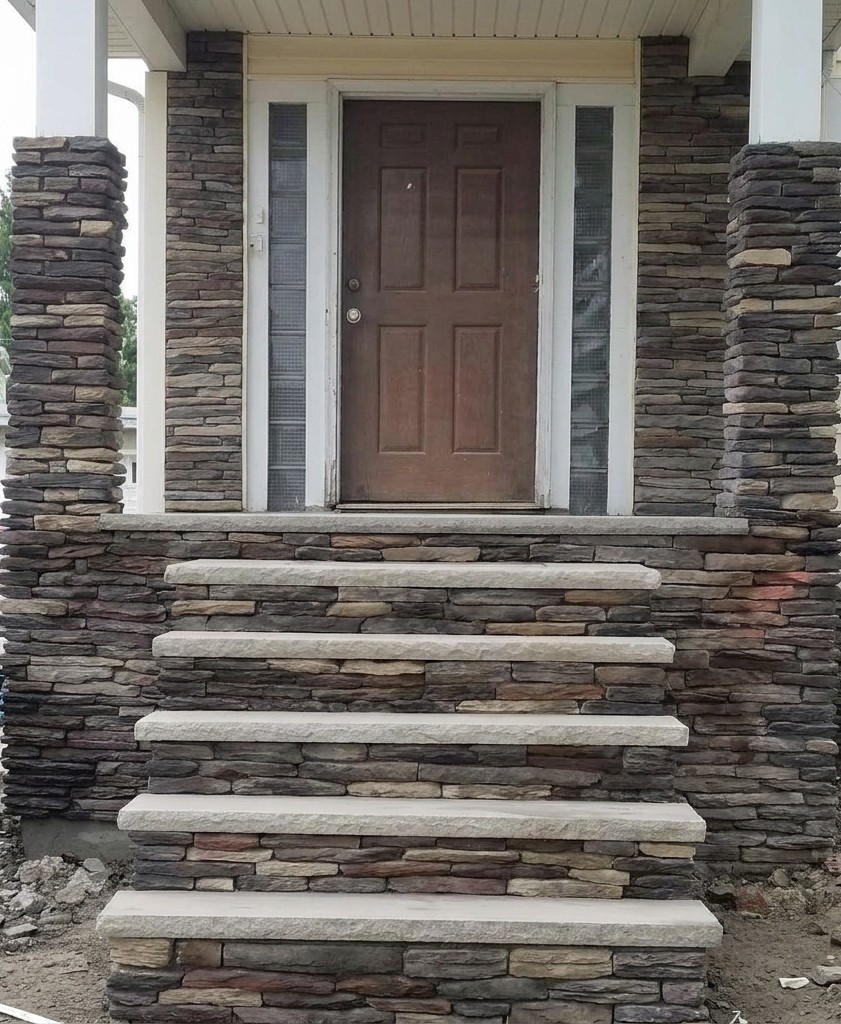
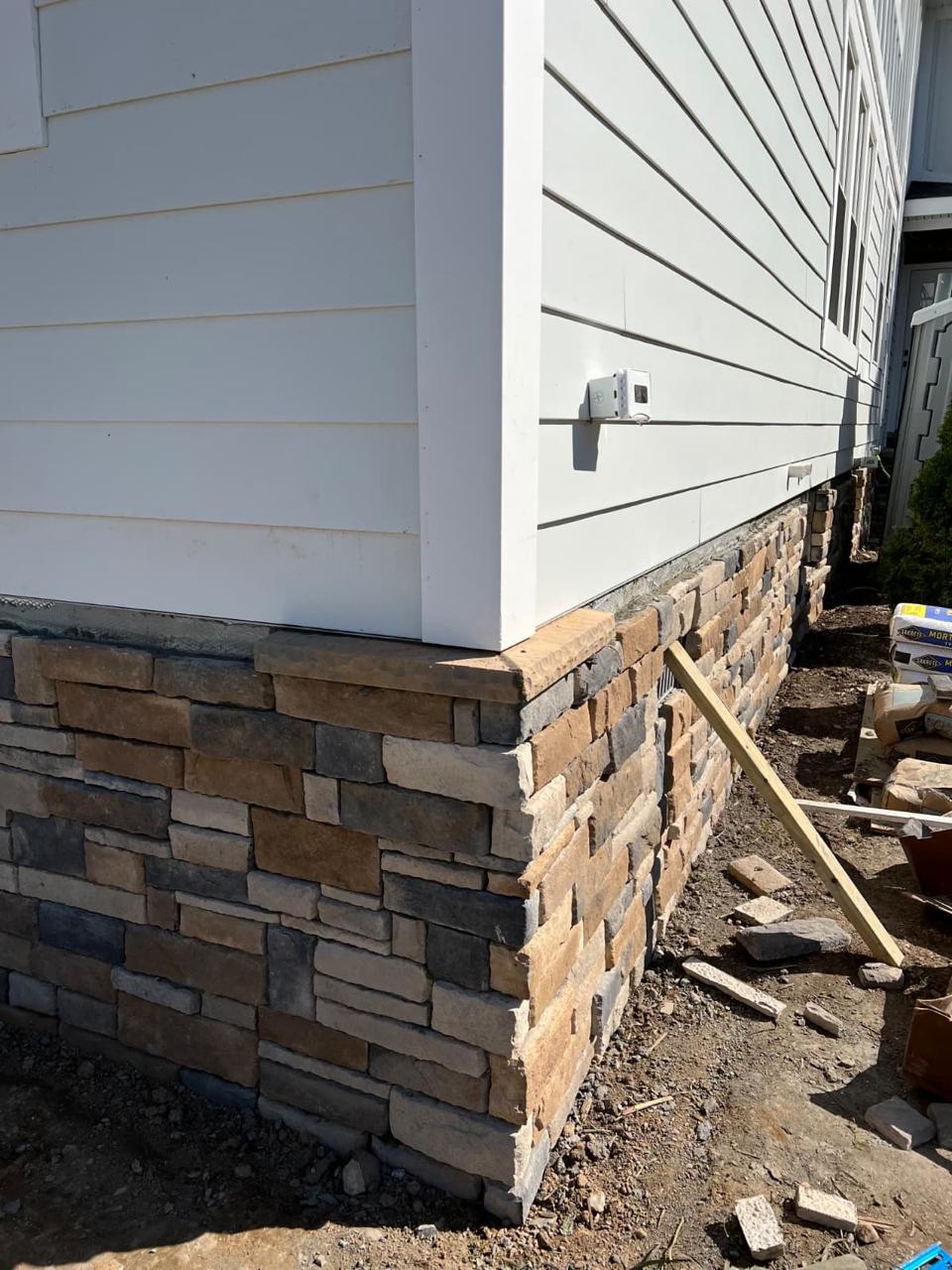
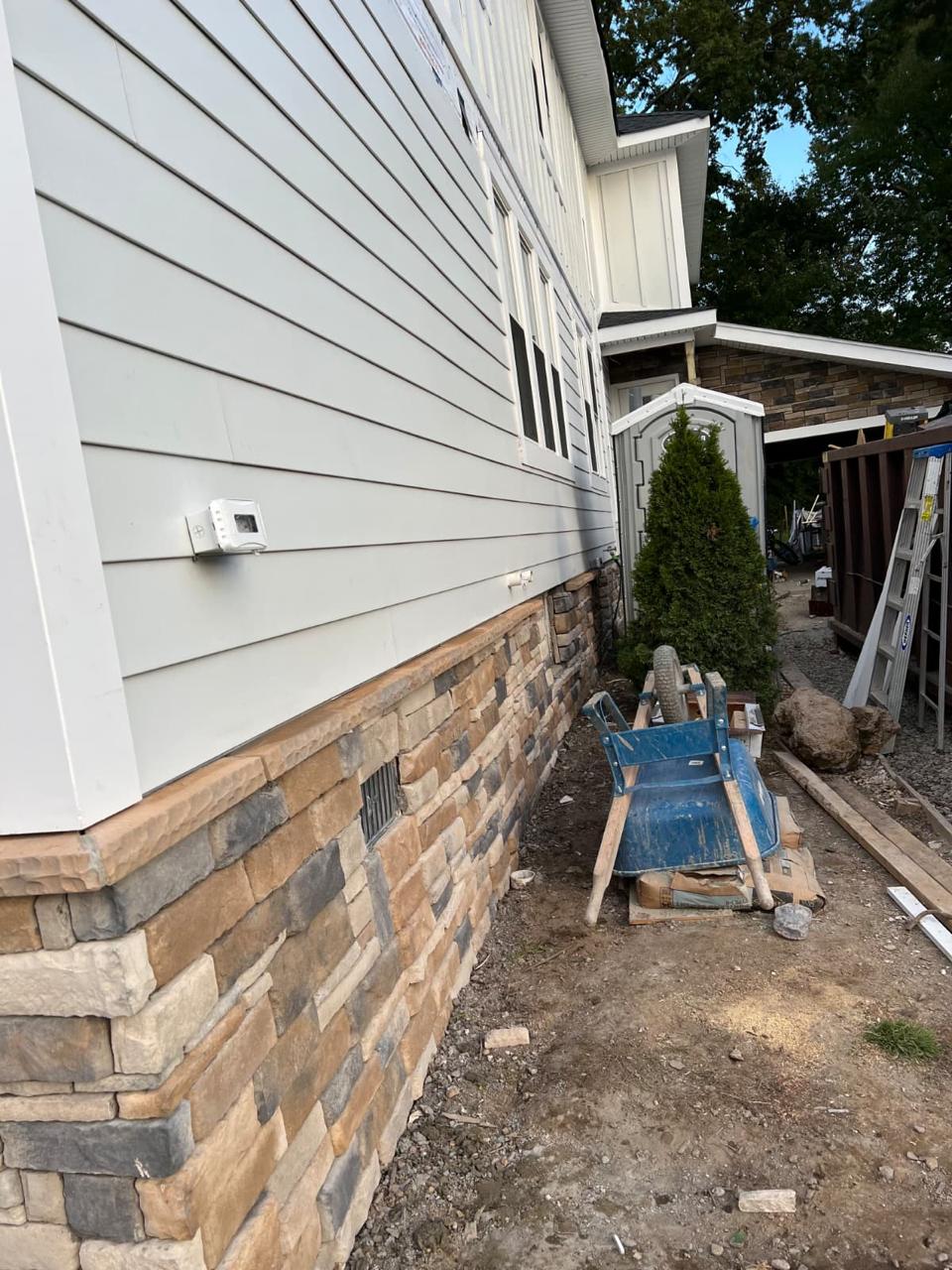
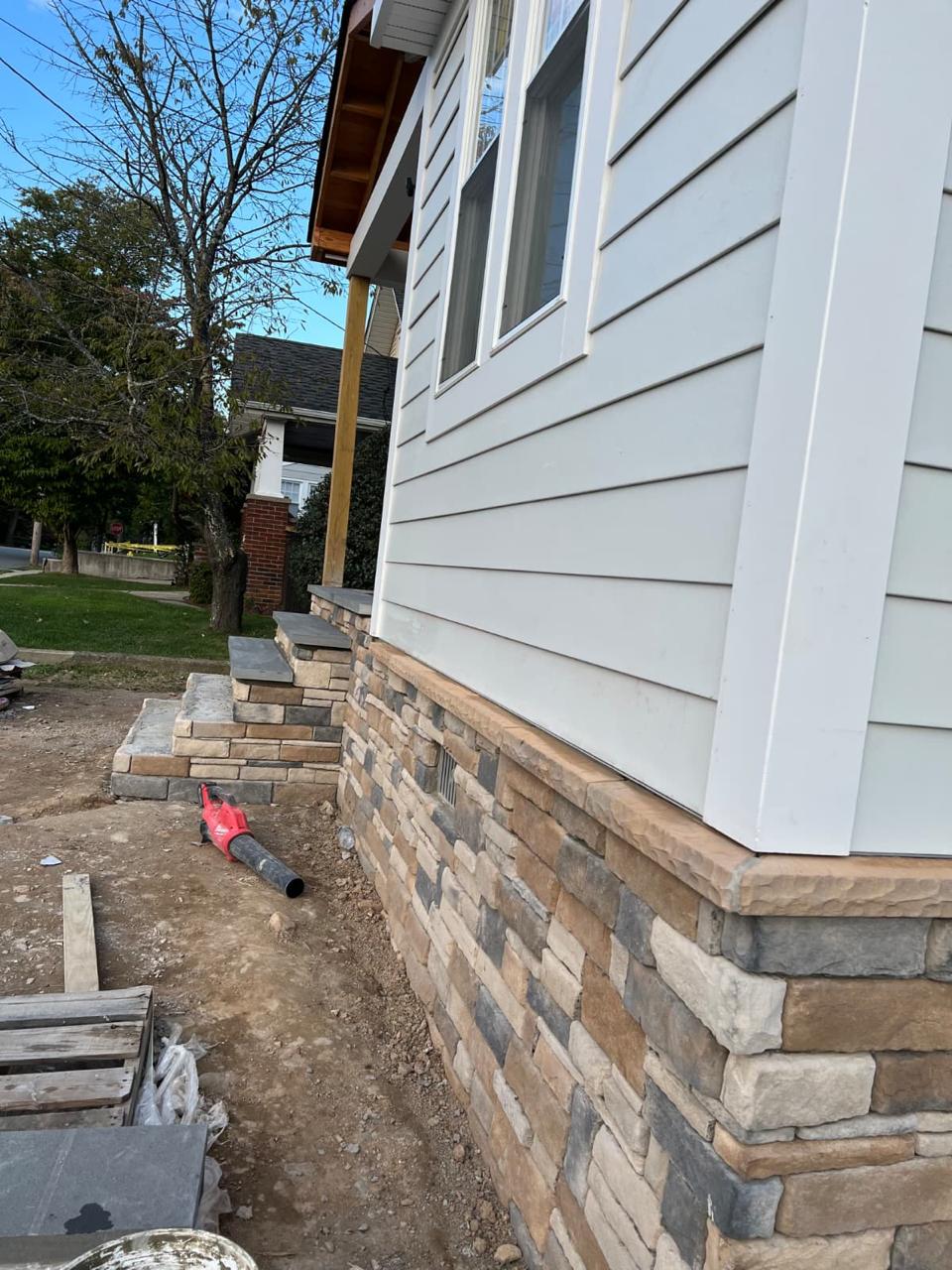
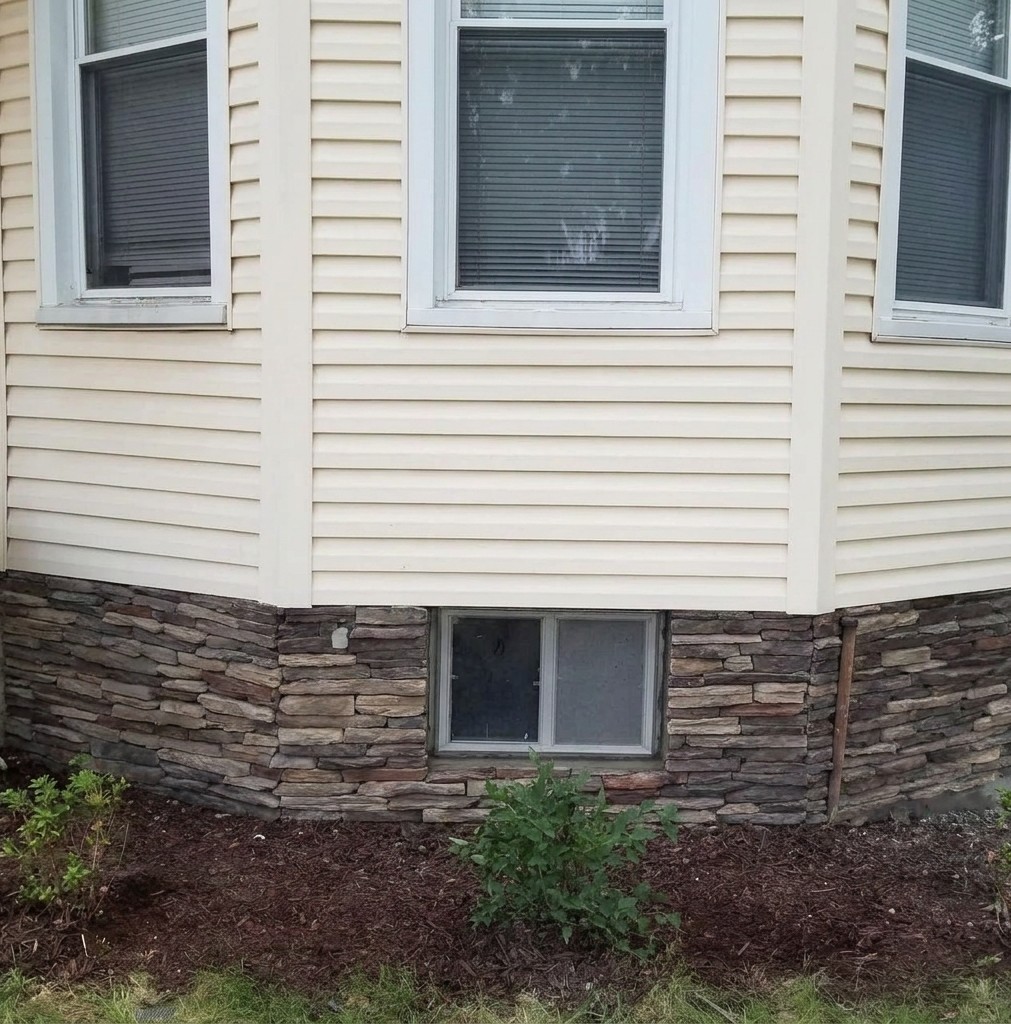
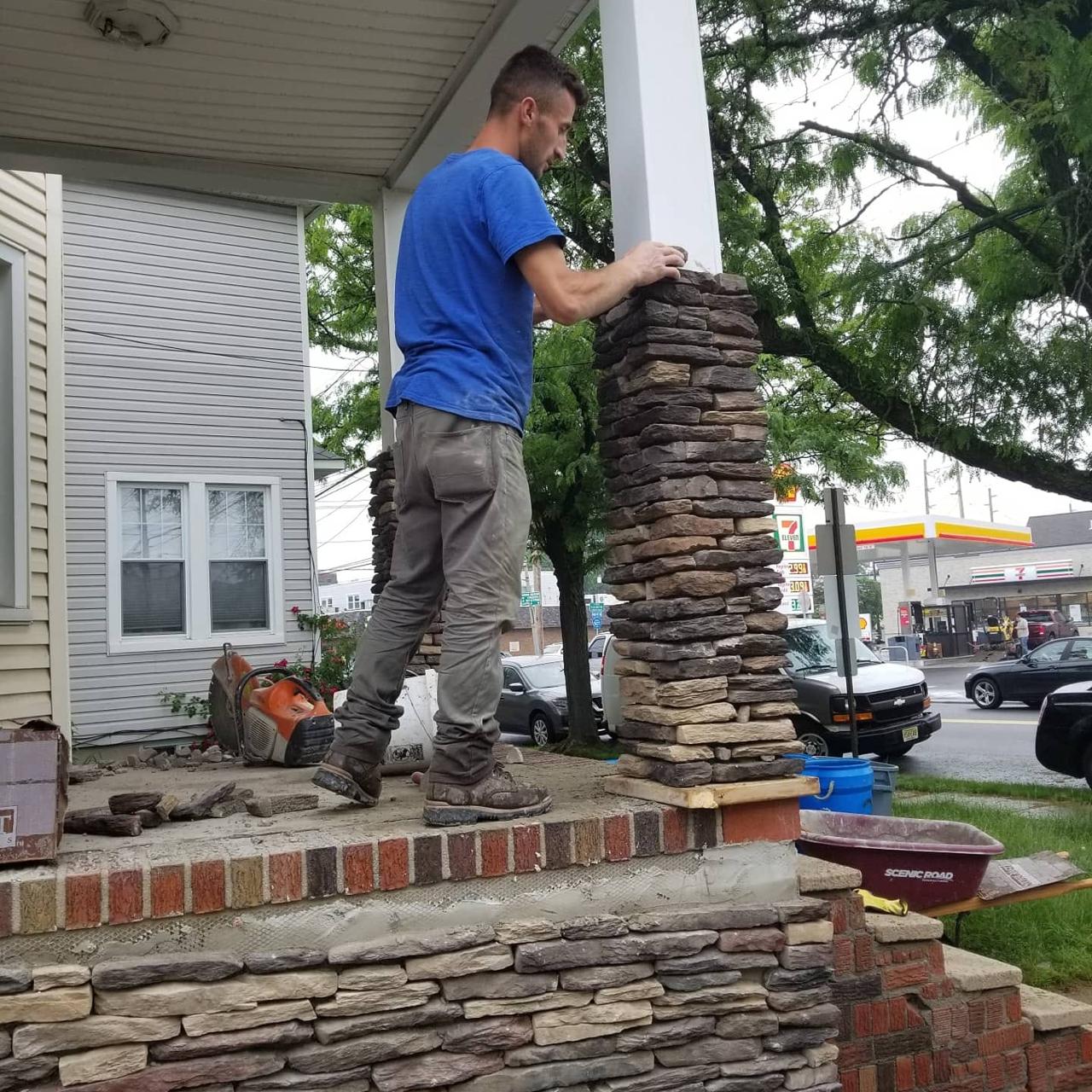
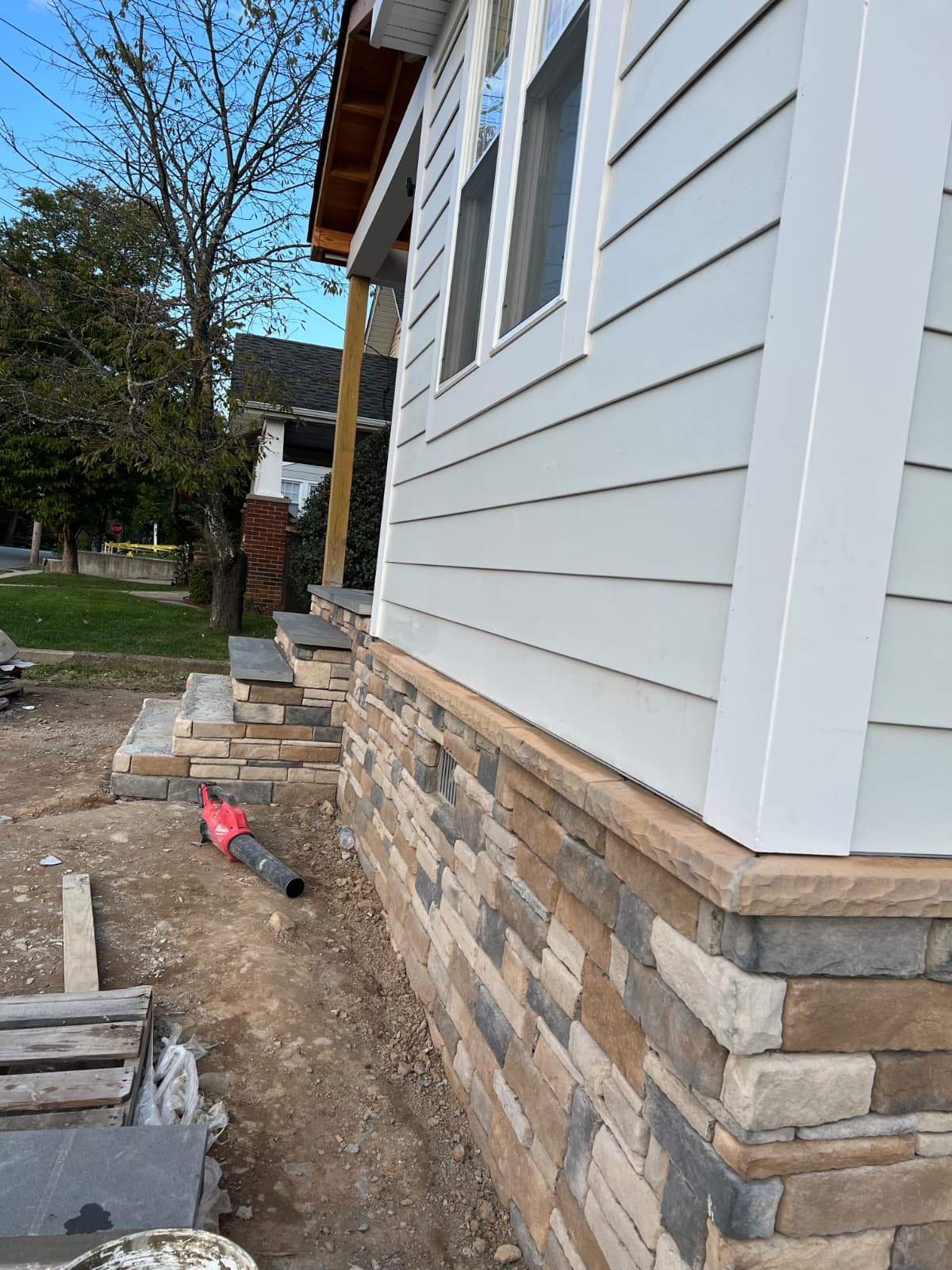
Stone veneer or paint: which does your wall need?
Paint is a coating. Stone veneer is a new, protective surface. They solve different problems, so the right choice depends on the condition of the wall underneath.
What it isPaint: A thin coating on the existing surfaceStone veneer: A new layer of stone over the wall
How long it lastsPaint: Typically needs recoating every several yearsStone veneer: Typically decades, with no repainting
Peeling and flakingPaint: Can return, especially near the soil lineStone veneer: Nothing to peel
Cracks and stainsPaint: Hairline cracks and stains show throughStone veneer: Covers surface cracks and stains
Structural problemsPaint: Does not fix themStone veneer: Does not fix them either; repair first
Upfront costPaint: LowerStone veneer: Higher, but it replaces repeated repainting
LookPaint: Flat and uniformStone veneer: Textured and natural, adds curb appeal
Paint is enough whenthe wall is sound and dry; the only issue is faded or stained paint; you want the lowest-cost refresh.
Veneer makes sense whenpaint keeps peeling or staining; the surface is patched, uneven or unfinished; you want a lasting upgrade to curb appeal.
Fix first, then finish whencracks are wide, stepped or growing; the wall is damp, shows white powder (efflorescence) or active water; the wall is bowing or leaning. Neither paint nor veneer fixes these. We will tell you what the wall needs first.
Which retaining wall should you build?
The right wall depends on its height, the soil behind it and how it will be used.
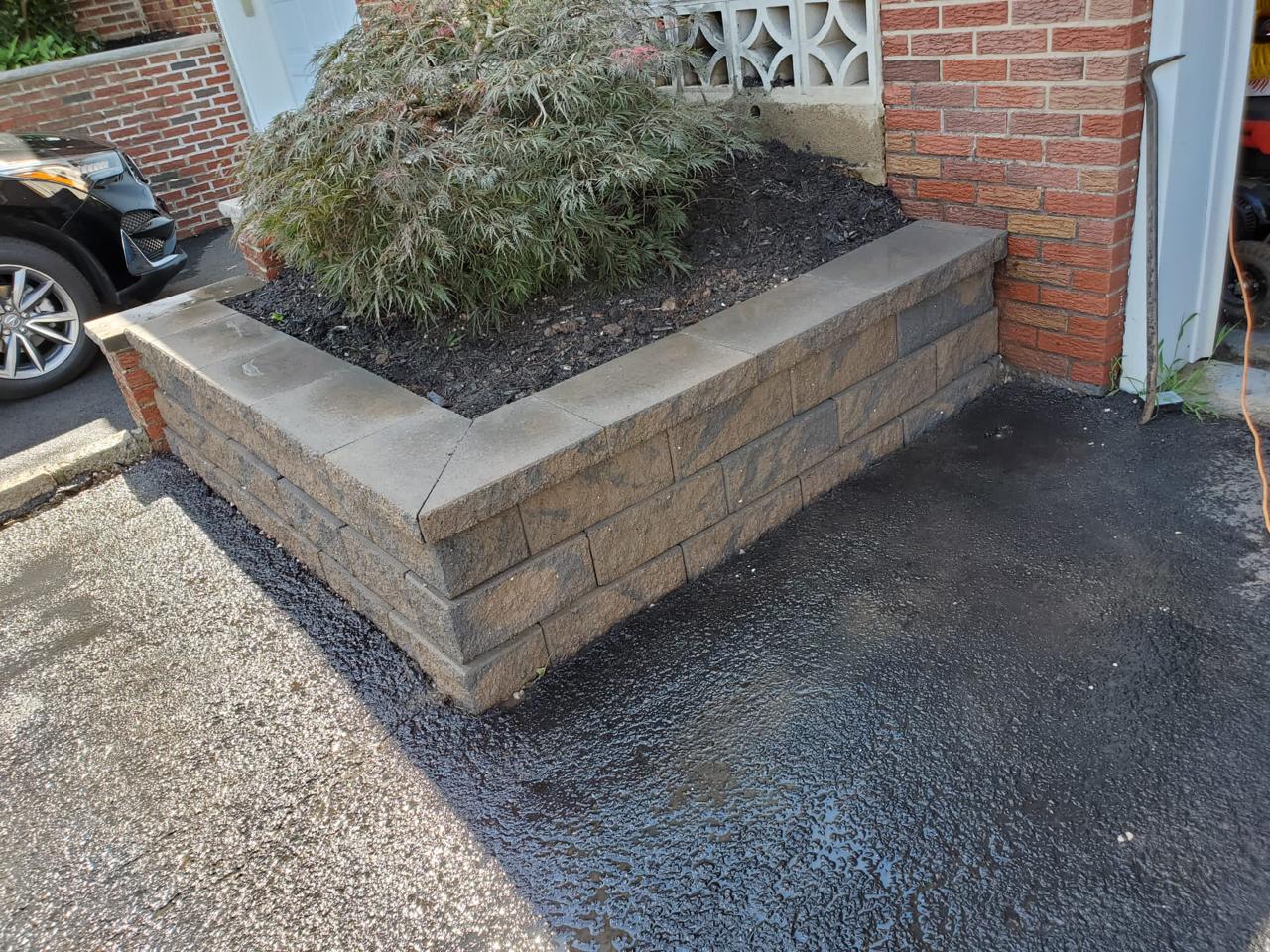
Segmental block
Best forRaised beds, garden walls and most residential retaining walls
Typical lifespanRoughly 25 to 50+ years
Watch forNeeds a compacted stone base and drainage behind it.
Used in our Clifton projectPoured concrete
Best forTall, load-bearing walls
Typical lifespanRoughly 50+ years
Watch forHighest cost; needs forms and reinforcement, and is usually engineered when tall.
Natural stone
Best forShowpiece walls where the look matters
Typical lifespanRoughly 50+ years when built well
Watch forPremium cost; needs skilled laying.
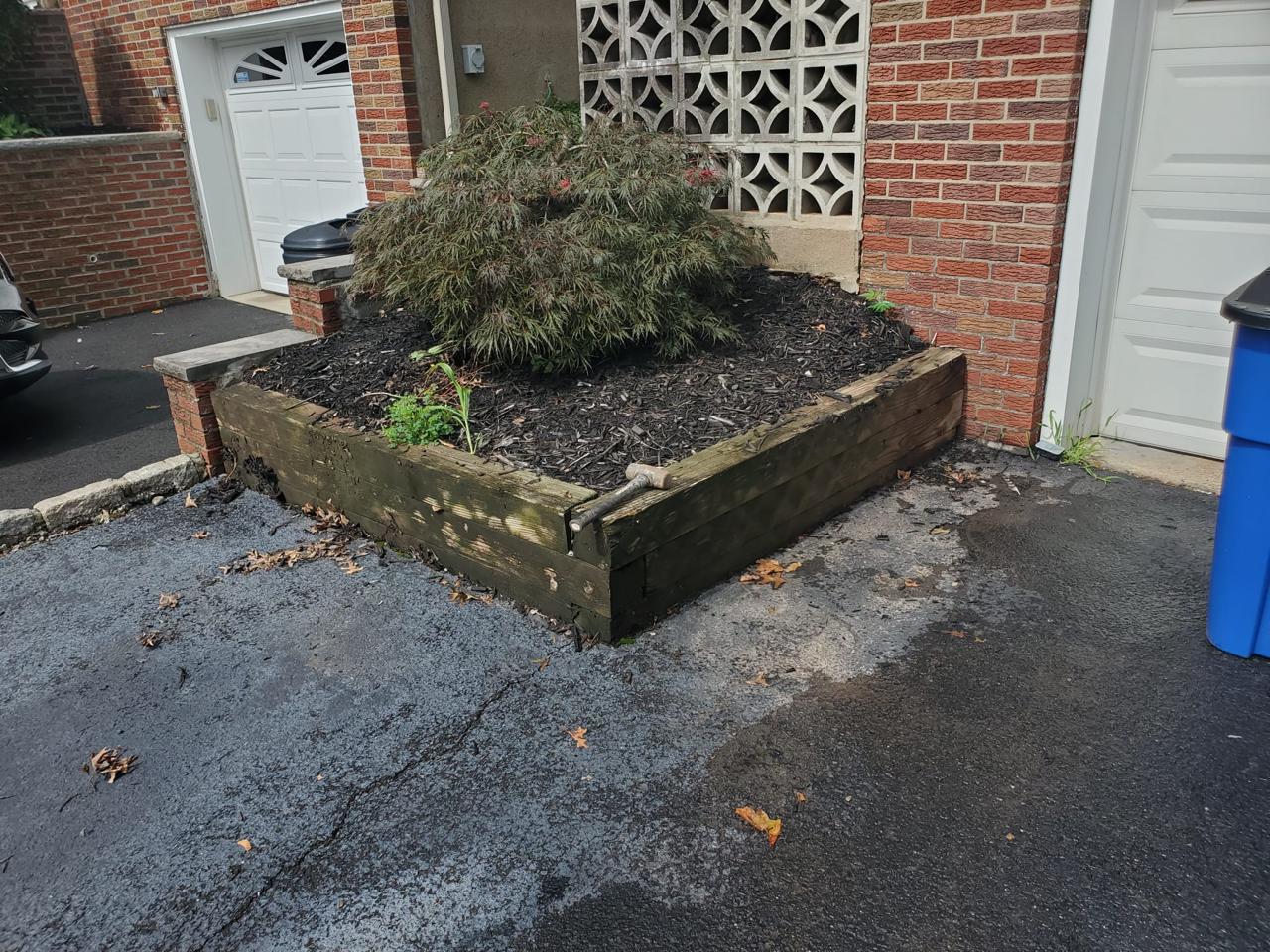
Timber
Best forLow, budget or short-term walls
Typical lifespanRoughly 15 to 25 years
Watch forIt rots and eventually has to be replaced.
Low planter or raised bed: block. Wall over 4 feet, or holding up a driveway or structure: engineered concrete or reinforced block. Design feature: natural stone.
Lifespans are typical industry ranges. Drainage and installation matter more than the material.
How we build walls that last
Retaining wallsBase: a compacted stone base and a buried first course for block walls; a footing below the 36-inch frost line for poured or mortared walls.
Drainage: drainage stone and a drain pipe behind the wall so water does not build up pressure.
Backfill: compacted in layers. Most wall failures trace back to water, a weak base or loose backfill.
Finish: cap stones set to shed water and tie the top course together.
Stone veneerSound surface: the wall is checked first; cracks and moisture problems are fixed before stone goes on.
Bond: the surface is prepared so the stone bonds properly, with water-management details where the stone meets siding and grade.
Details: a ledge or cap course at the top, with vents, lights and pipes cut cleanly into the stonework.
Where we build walls
Morris County: Pompton Plains. Passaic County: Clifton. Essex County: West Orange. ...and nearby North Jersey towns.
Walls and stone veneer: common questions
Do I need a permit for a retaining wall in New Jersey?
Often, yes. Under the Uniform Construction Code, a retaining wall measured more than 4 feet from the bottom of the footing to the top generally needs a construction permit and engineering. Shorter walls may be exempt from a construction permit, but many towns still require a zoning permit, and walls near a property line are subject to setbacks and drainage rules. Check with your local building and zoning office before you start.
Can stone veneer be installed over a painted or parged wall?
Usually, if the wall is structurally sound and dry. The old surface is prepared so the new layer bonds, and cracks or moisture problems are fixed first.
Does stone veneer need maintenance?
Very little. There is no paint to redo. An occasional rinse and a look at the joints and caulked edges is usually enough.
Is stone veneer waterproof?
No. It is a finish, not a waterproofing system. Water management behind and around it is what keeps the wall dry.
How do I know a retaining wall is failing?
Look for leaning or bowing, gaps and stepped cracks, bulging in the middle, soil washing out at the base, or soft, rotting timbers. Water seeping through or pooling behind the wall is a warning sign too.
What does a wall or veneer project cost?
It depends on the length, height, material, access and drainage needs, so we quote after seeing the site. Send photos and rough measurements, or ask for a visit.